Skip to content

ISO 898-1:2023 · Metric system

Metric hex bolts
Classes 5.8, 8.8, 10.9 and 12.9

A technical guide for comparing strength, heat treatment and applications according to the class marked on the bolt head.
ISO 898-1
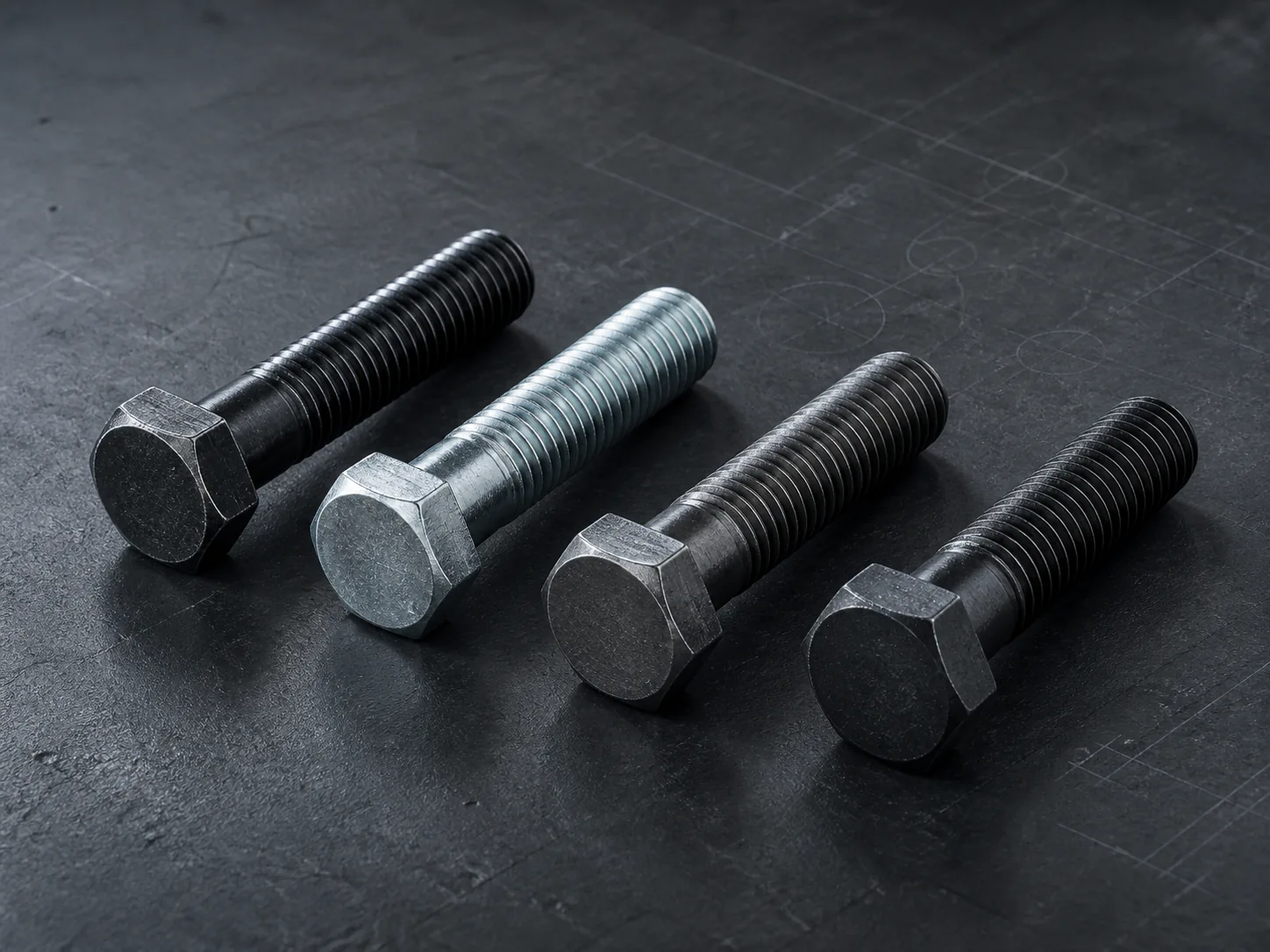
Set of four metric hex bolts in different finishes and strength levels

High metric strength

Up to 1200 MPa

12.9

Applicable standards

Three essential references.

ISO 898-1:2023

Mechanical properties

Sets out the mechanical requirements, property classes and test methods applicable to carbon steel and alloy steel fasteners.

ISO 4014:2022

Partial thread

Current dimensional standard for hex head bolts with partial thread; it supersedes the DIN 931 reference.

ISO 4017:2022

Full thread

Current dimensional standard for hex head bolts with full thread; it supersedes the DIN 933 reference.

Quick identification

The class sets the strength and the yield ratio.

The first number indicates the nominal tensile strength; the second defines the ratio between yield strength and tensile strength.
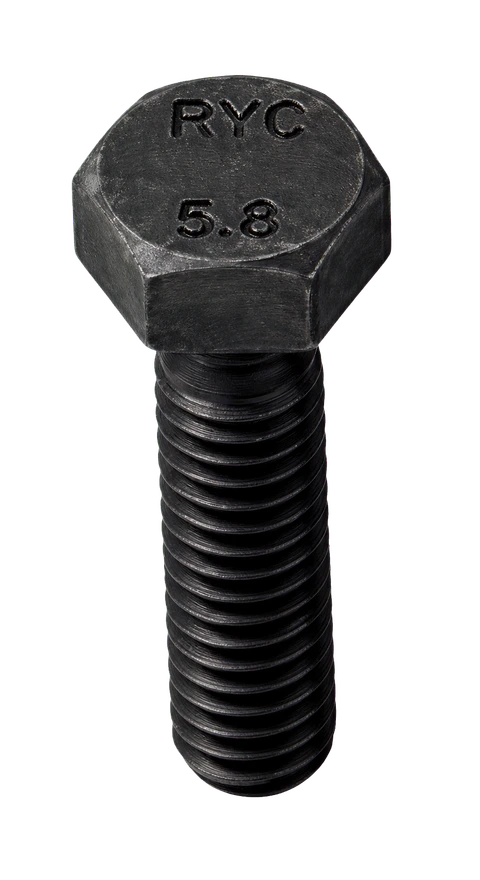
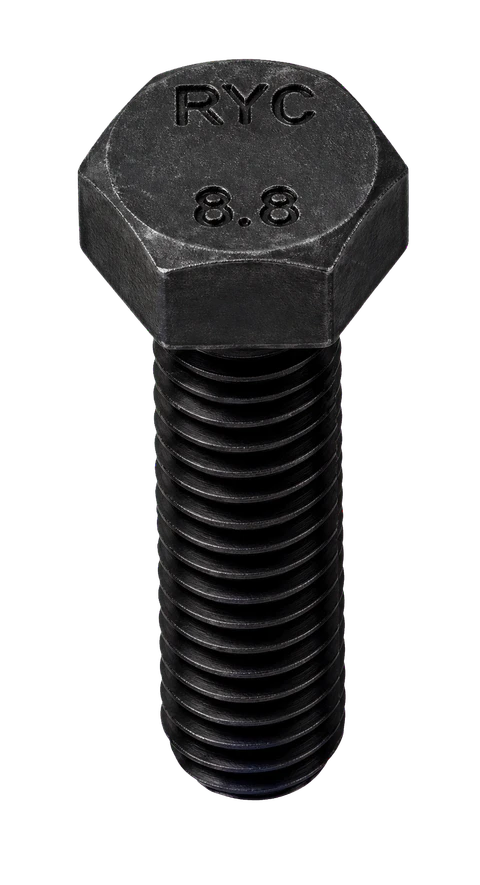
Metric bolt ISO 898-1 Class 5.8

5.8 + manufacturer mark

Class 5.8

500 MPa

Minimum tensile

Yield strength
400 MPa · Ratio 0.8
Application
Light machinery, structures and general use
Metric bolt ISO 898-1 Class 8.8

8.8 + manufacturer mark

Class 8.8

800 MPa

Minimum tensile

Yield strength
640 MPa · Ratio 0.8
Application
Construction, machinery and industrial equipment
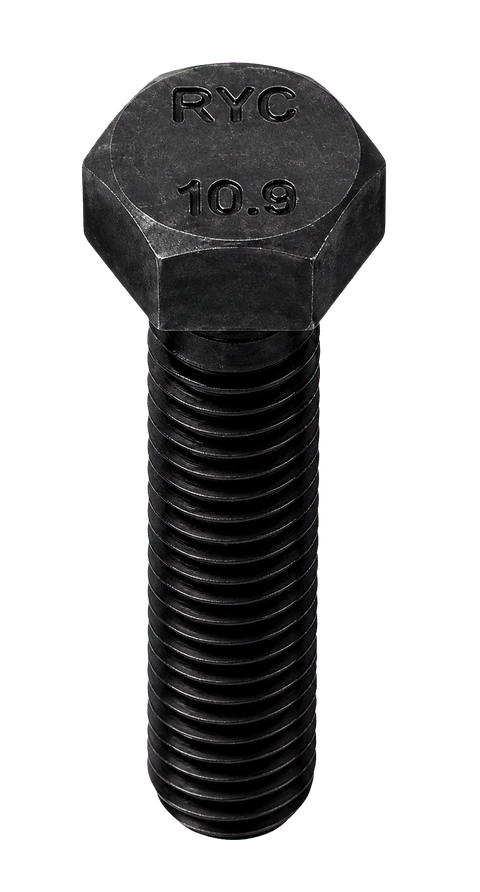
Metric bolt ISO 898-1 Class 10.9

10.9 + manufacturer mark

Class 10.9

1000 MPa

Minimum tensile

Yield strength
900 MPa · Ratio 0.9
Application
Mining, power, heavy machinery and automotive
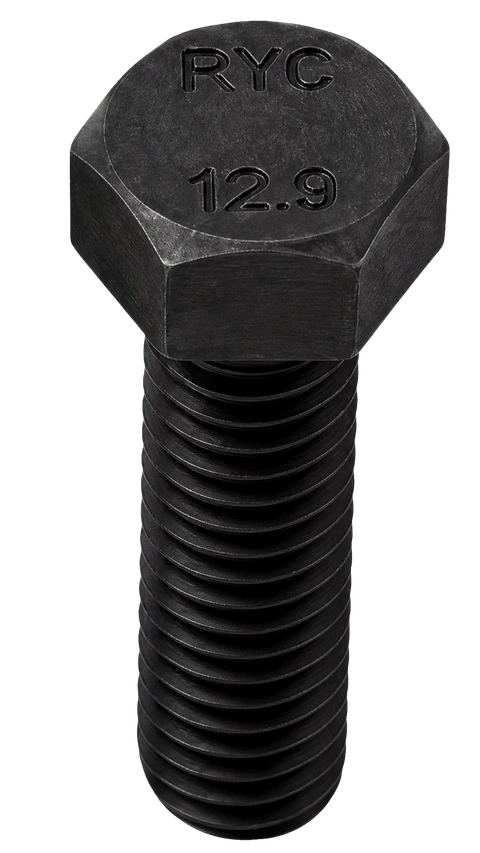
Metric bolt ISO 898-1 Class 12.9

12.9 + manufacturer mark

Class 12.9

1200 MPa

Minimum tensile

Yield strength
1080 MPa · Ratio 0.9
Application
Critical high-strength applications, moulds and precision equipment

Comparison sheet

ISO 898-1 technical specifications

Comparison adapted to every screen size.

Class 5.8

Material
Carbon steel
Heat treatment
Normalised or rolled
Minimum tensile strength
500 MPa
Minimum yield strength
400 MPa
Yield to tensile ratio
0.8
Typical hardness
≈ HB 155–250
Head marking
5.8 + manufacturer mark
Typical applications
Light machinery, structures and general use
Coatings per the standard
Black, zinc plated, galvanized
Approximate SAE equivalent
Grade 2

Class 8.8

Material
Medium carbon steel
Heat treatment
Quenched and tempered
Minimum tensile strength
800 MPa
Minimum yield strength
640 MPa
Yield to tensile ratio
0.8
Typical hardness
≈ HRC 22–32
Head marking
8.8 + manufacturer mark
Typical applications
Construction, machinery and industrial equipment
Coatings per the standard
Black, zinc plated, galvanized*
Approximate SAE equivalent
Grade 5

Class 10.9

Material
Alloy steel
Heat treatment
Quenched and tempered
Minimum tensile strength
1000 MPa
Minimum yield strength
900 MPa
Yield to tensile ratio
0.9
Typical hardness
≈ HRC 32–39
Head marking
10.9 + manufacturer mark
Typical applications
Mining, power, heavy machinery and automotive
Coatings per the standard
Black, zinc flake, fluoropolymers**
Approximate SAE equivalent
Grade 8

Class 12.9

Material
Alloy steel
Heat treatment
Quenched and tempered
Minimum tensile strength
1200 MPa
Minimum yield strength
1080 MPa
Yield to tensile ratio
0.9
Typical hardness
≈ HRC 39–44
Head marking
12.9 + manufacturer mark
Typical applications
Critical high-strength applications, moulds and precision equipment
Coatings per the standard
Black, zinc flake, fluoropolymers**
Approximate SAE equivalent
Above Grade 8

Technical notes

Considerations for selecting the coating and preserving the performance of the bolt.

  1. 1Hot-dip galvanizing for Class 8.8 requires allowing for tolerances and thread overtapping.
  2. 2For classes 10.9 and 12.9, electroplated coatings and hot-dip galvanizing are not recommended because of the risk of hydrogen embrittlement. To reduce that risk, apply ASTM F3393-24.

Technical support

Need to confirm the right metric class for your application?

Send us the size, thread pitch, quantity, class and finish on WhatsApp. Our technical team will help you review the requirement.